
Safer, More Comfortable Bus Journeys Year-Round
Practical guidance and campaigns for passengers and drivers—from staying visible at unlit bus stops after dark to supporting cooler buses in hot weather.
Be Seen at Unlit Bus Stops in the Dark
Many rural and suburban bus stops have little or no street lighting. When a bus approaches at road speed with dipped headlights, a passenger wearing dark clothing can blend almost completely into the shadows until it is too late for the driver to stop safely.
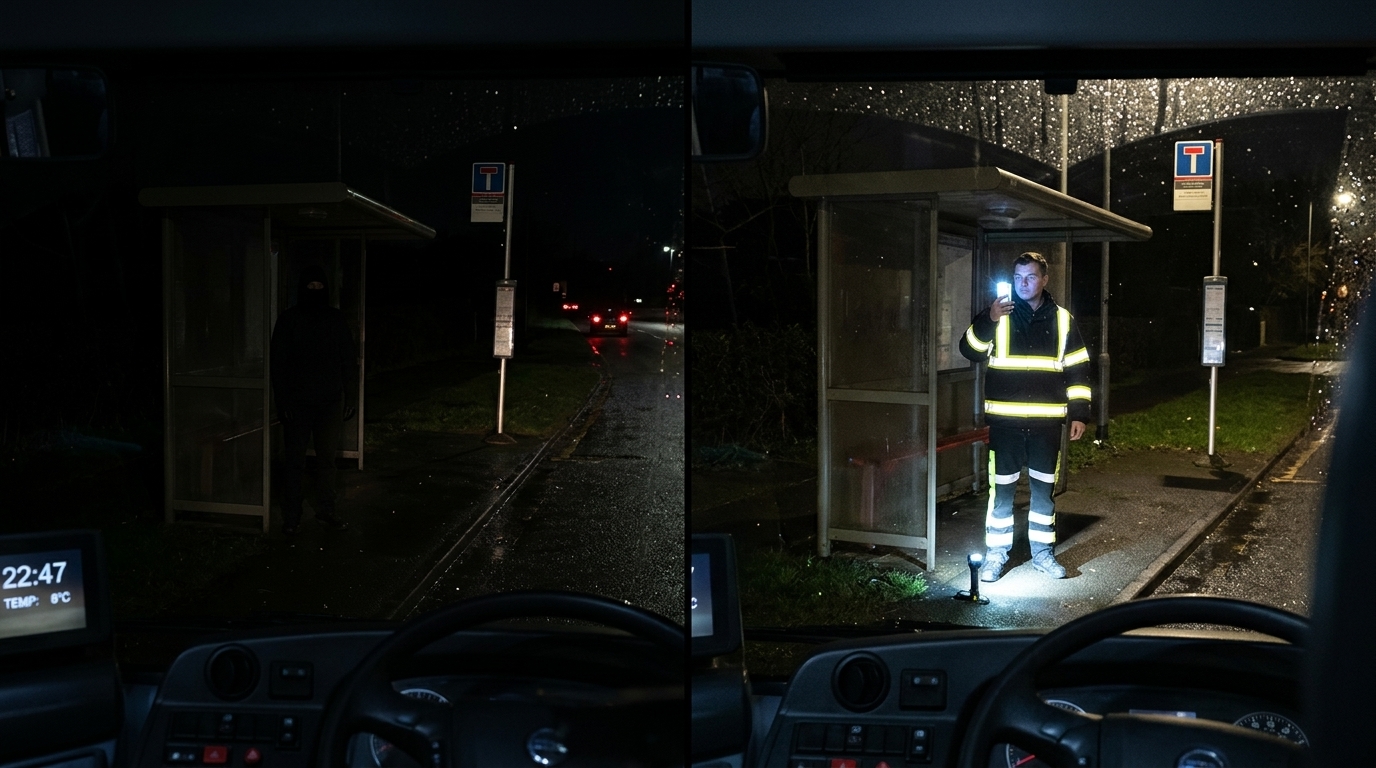
Left: Hard to Spot in the Dark
An unlit bus stop shelter paired with dark coats, trousers, and bags leaves almost nothing for headlights to reflect off. Drivers only spot the passenger at the last second, risking a missed stop or harsh emergency braking.
Right: Clearly Visible to Your Driver
Wearing clothing, a rucksack, or a slap-band with reflective hi-vis strips—and holding out a lit smartphone screen or small torch as the bus approaches—gives the driver plenty of time to slow down smoothly and pull in safely.
Supporting Cooler, Safer Buses in Hot Weather
Extreme heat affects everyone onboard — passengers, children, elderly travellers, and drivers working long shifts. Large windscreens, panoramic upper-deck windows, and packed commuter runs cause bus cabins to heat up rapidly during warm spells, and many buses and coaches still operate without adequate cooling or ventilation.
A public petition is calling for improved cooling systems on public service vehicles to ensure safer, healthier travel for all. You can read and sign the petition below.
Why Cab & Saloon Cooling Matters
- Driver Concentration: High cab temperatures increase fatigue and reduce reaction times during long shifts in heavy traffic.
- Vulnerable Passengers: Elderly travellers, young children, and passengers with health conditions are especially sensitive to overheated saloons.
- Ventilation & Air Flow: Working air-chill systems, open hopper windows, and roof hatches keep air circulating when stopped in traffic.
What Helps on Hot Days
- Operators & Fleets: Routine pre-summer checks on cab air-conditioning, saloon blowers, and window catches before heatwaves hit.
- Drivers: Carry plenty of cold water, use cab blinds where safe, and make use of shaded rest stops and welfare facilities.
- Passengers: Carry water on longer journeys, keep hopper windows open if air-con is not fitted, and alert the driver if anyone feels unwell.